
Artificial Intelligence is no longer just a supporting tool, it is becoming the foundation of how modern businesses operate.
By 2026, organizations will no longer ask “How can we use AI?”
Instead, the question will shift to:
“How is our business built around AI?”
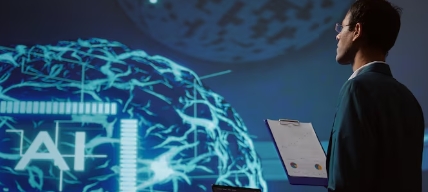
This marks the rise of AI-native enterprises business that embed AI into their core processes, decision-making, and business models from the ground up.
What Is an AI-Native Enterprise?
An AI-native enterprise is not simply a company that uses AI tools.
It is an business where:
- AI drives decision-making
- Processes are automated and continuously optimized
- Data flows seamlessly across systems
- Intelligence is embedded into every workflow
Unlike traditional digital transformation, AI-native transformation is not about digitizing existing processes, it is about reimagining how businesses operate entirely.
Why AI-Native Enterprises Are Emerging Now
1. Explosion of Data
Business today generate massive amounts of data across operations, customers, and systems.
Without AI, this data is underutilized.
With AI, it becomes a strategic asset that drives insights and decisions.
2. Demand for Real-Time Decision-Making
Markets are moving faster than ever. Businesses need to:
- Predict trends
- Respond instantly
- Optimize continuously
AI enables real-time analytics and predictive capabilities that traditional systems cannot match.
3. Shift Toward Automation at Scale
Manual processes limit scalability. AI-native enterprises automate:
- Customer interactions
- Operational workflows
- Risk detection and response
This allows organizations to scale faster with fewer operational constraints.
4. Competitive Pressure
Companies that adopt AI early gain significant advantages in:
- Efficiency
- Cost optimization
- Customer experience
- Innovation speed
As a result, AI adoption is no longer optional, it is a competitive necessity.
How AI Will Reshape Business Models
1. From Reactive to Predictive Organizations
Traditional businesses react to problems, AI-native enterprises anticipate them.
With predictive analytics, companies can forecast demand, detect risks early, and make smarter decisions before issues happen.
2. From Static Processes to Adaptive Systems
Traditional workflows are fixed and rigid.
AI enables continuous learning and optimization, turning operations into systems that evolve and improve over time.
3. From Human-Centric to Human + AI Collaboration
AI doesn’t replace humans, it enhances them.
AI handles repetitive, data-heavy tasks, allowing humans to focus on strategy, creativity, and high-impact decisions.
4. From Products to Intelligent Services
Products are no longer static.
With AI, they become dynamic offering personalization, predictive capabilities, and continuous improvement based on real-time data.
Key Capabilities of AI-Native Enterprises
1. Integrated Data Ecosystem
AI needs strong data foundations.
Data must be centralized, clean, and accessible to ensure accurate insights and decisions.
2. Real-Time Intelligence
Speed is critical.
Business need systems that process data instantly and deliver actionable insights for faster decision-making.
3. AI-Driven Workflows
AI should be embedded into daily operations.
From automated triggers to intelligent recommendations, workflows become faster and more efficient.
4. Scalable Digital Infrastructure
AI requires strong infrastructure.
This includes cloud scalability, high processing power, and secure systems to support growth.
5. Strong Governance and Ethics
Trust is essential.
Business must ensure transparency, accountability, and responsible AI usage as adoption increases.
Challenges in Becoming AI-Native
Despite its potential, the transition is not without challenges:
- Legacy systems that limit integration
- Data silos and poor data quality
- Lack of AI-ready talent and skills
- Resistance to organizational change
Overcoming these challenges requires not just technology, but a shift in mindset and strategy.
From Digital to AI-Native: The Next Evolution
Digital transformation focused on digitizing processes.
AI-native transformation goes further, it redefines them.
Business must move:
- From systems to intelligence
- From data to decisions
- From automation to autonomy
Those who successfully make this shift will not just improve efficiency,
they will redefine how business is done.
Conclusions
AI is no longer just an add-on, it is becoming the core of modern enterprises. By 2026, the most competitive businesses will be those that embed AI into their foundation, build systems that continuously learn and adapt, and use intelligence to drive every decision. The future belongs to businesses that are not just digital, but truly AI-native.